
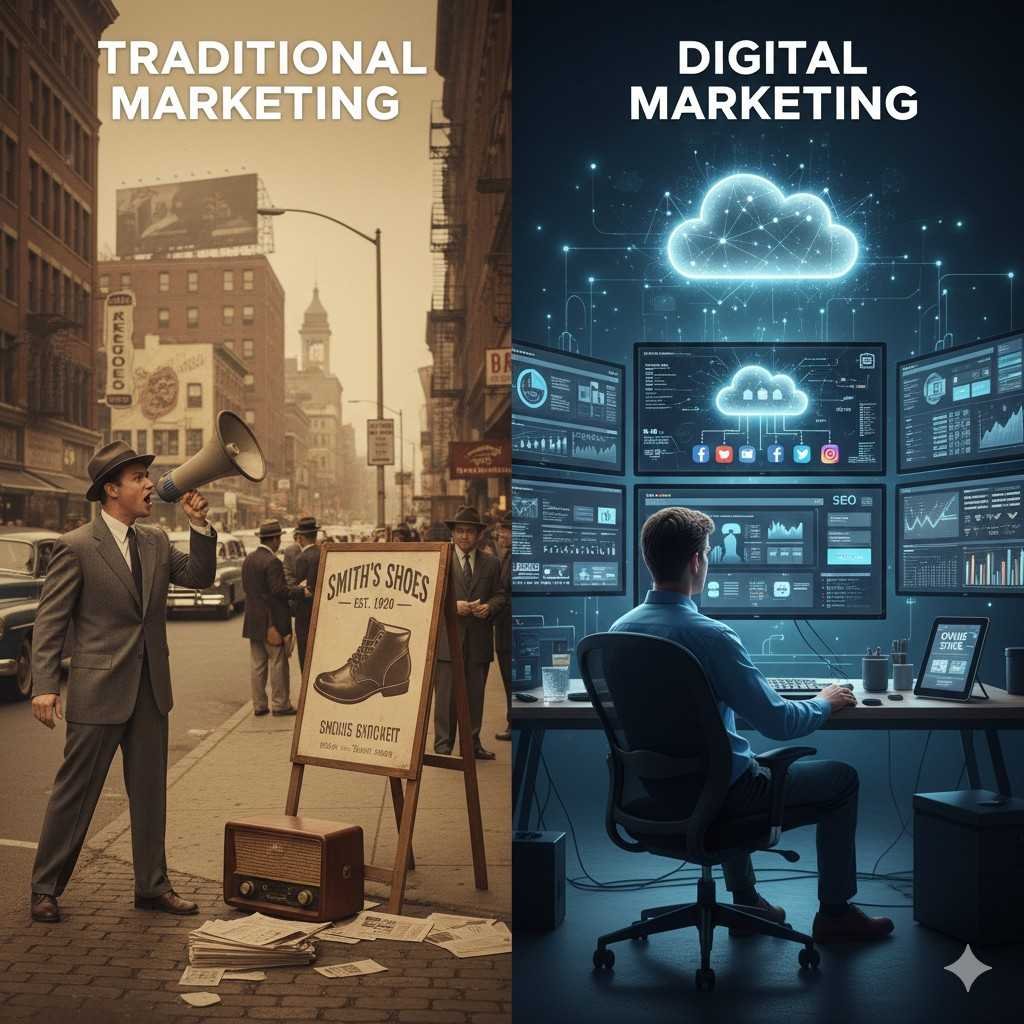
A Comprehensive Comparison between Digital and Conventional Marketing for 2025
Selecting the appropriate marketing plan is more crucial than ever in today’s cutthroat corporate environment. Brands are constantly trying to determine which approach delivers better results, making Traditional Marketing vs Digital Marketing a major point of debate. With shifting consumer behaviour, rapid technological growth, and evolving buying patterns, the discussion between these two marketing methods continues to intensify.
In order to assist you grasp the distinctions, benefits, drawbacks, and best practices for your company in 2025, we thoroughly examine traditional and digital marketing in this article.
Introduction: A Comparison between Digital and Conventional Marketing
Traditional Marketing vs Digital Marketing contrasts crucial advertising techniques, as the term implies.
Digital marketing specializes in internet systems and virtual media, while conventional advertising relies on offline and physical marketing techniques.
Businesses are more and more combining both strategies to enhance reach and conversions. However, the best choice still depends for your goals, target marketplace, industry, and financial boundaries.
What is traditional marketing?
Long-standing, traditional offline marketing techniques are referred to as traditional marketing. They consist of:
Print advertisements in newspapers and magazines
radio and television advertisements.
Booklets, banners, and flyers
Booths and billboards
Telephone and direct mail marketing
Occasions and displaysPrint advertisements in newspapers and magazines
When it comes to reaching people who might not frequently use smartphones or the internet, conventional marketing is still effective. raising brand awareness while involving a large audience are its main objectives.
Common Marketing Components:
Materials that are tangible and physical
wide, mass-market focus
Insufficient audience measurement
Exorbitant costs for production and delivery
Long-term recall of a brand
What is digital marketing?
The use of digital platforms and technologies to market items and services is known as digital marketing. . It consists of:
SEO, or search engine optimisation
Marketing on social media
Marketing with content
Advertising using pay-per-click, or PPC,
Email advertising
Influencer advertising
Marketing of websites and landing pages
Digital marketing allows businesses to interact with audiences because consumers spend most of their time online.
Internet marketing characteristics include:
Measurable and economical
Personalised and focused advertising
Analytics and monitoring in real time
Reach of a global audience
Simple to scale and optimise
Important Differences Between Digital and Conventional Marketing
In Traditional Marketing vs Digital Marketing, the first major difference is your interaction style.
1.Your Interaction Style
Traditional advertising uses minimum interaction and is predicated on one-way communique.
Digital marketing allows instantaneous -way interplay in which customers can remark, like, percentage, and participate in discussions.
2.Possibility of Targeting
Traditional advertising avoids certain segmentation and typically targets massive, wide audiences.
Digital advertising and marketing offers advanced focused on alternatives based totally on age, gender, location, interests, and behavior.
In Traditional Marketing vs Digital Marketing, another key difference lies in charges and outcome measurement.
3. Charges
Conventional: Costly production and media (print, radio, and television).
Digital: Less costly; companies can begin with a modest budget.
4. Determining Outcomes
Conventional: It is difficult to track performance accurately.
Digital: Every click, view, and conversion can be monitored.
In Traditional Marketing vs Digital Marketing, audience reach and engagement levels differ greatly.
- Audience Reach
Traditional marketing usually reaches regional or local audiences.
Digital marketing offers endless possibilities with a global reach. - Engagement Level
Traditional marketing allows minimal audience participation.
Digital marketing encourages high interaction through email, social media, and interactive content.
Conventional Marketing Benefits
1. Strong Local Outreach
Neighbourhood publications, pamphlets, and signage can be highly useful for shops, food chains, and medical centres
2. Enhanced Brand Recall
Print ads, TV commercials, and billboards all have an impact and contribute to the establishment of brand authority.
3.Adaptable to Non-Digital Audiences
Rural audiences and older consumers respond better to traditional marketing techniques.
4. Physical presence promotes trust
Product catalogues and brochures are examples of tangible ads that some consumers find more trustworthy.
The first advantage of digital marketing
1.cost-effectiveness.
Even with modest advertising budgets, small businesses can still generate excellent results.
2. Comprehensive Information and Analysis
Every action is tracked with the use of tools like Facebook Insights and Google Analytics.
3. Extremely Focused Promotion
By limiting who sees their ads, brands may boost conversion rates.
4. Worldwide Reach
Online, even tiny startups can connect with global clients.
5. Optimisation in Real Time
An advertisement can be immediately modified if it isn’t working.
6. Increased Involvement
Reels, tales, blogs, and movies are examples of interactive material that increases client involvement.
Which Is Better: Digital or Conventional Marketing?
A “one size suits all” solution does not exist.The best choice is determined by:
Your intended audience
Your industry of business
Your marketing spending plan
Your long-term objectives
Your consumer’s habits of behaviour
Conventional Marketing Is Most Effective For:
Local physical establishments
Older demographic audiences
costly brand advertising (TV ads, billboards)
Businesses looking for long-term branding
The Top Applications of Internet Marketing:
Small companies and startups
Internet merchants
Organisations that emphasise supplying services
Corporations seeking to hire younger, tech-savvy staffers
Corporations seeking for ways of using performance-based advertising
Is It Possible to Use Both Together?
Indeed! The most successful brands use a mix of both, which is known as integrated marketing. In the discussion of traditional marketing vs digital marketing, many businesses discover that combining the two delivers the best results.
For example, a real estate company might use:
Newspaper ads, printed magazines, and signboard displays as part of its conventional advertising tactics.
In the discussion of traditional marketing vs digital marketing, online marketing includes tools like Google Ads, Facebook ads, and YouTube video marketing. Using both methods together ensures higher reach and improved conversion results.
Marketing’s Future: Digital Takes the Lead
Digital marketing is growing crucial even though traditional marketing is still important because of:
Increased use of smartphones
expansion of social media networks
An increase in the desire for internet shopping
AI-driven automation and targeting
Measurable Roi and performance monitoring
As 2025 and beyond approach closer, corporations that employ digital marketing will stay ahead of their rivals.
In conclusion
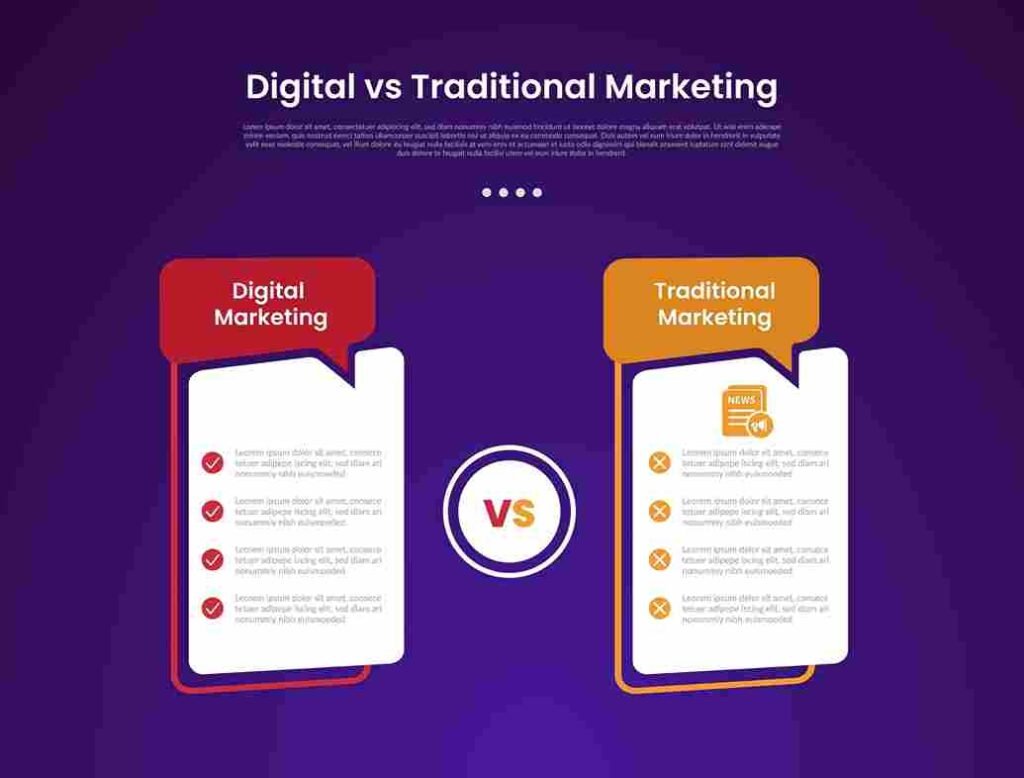
The particular blessings that each tactic offers are apparent within the differences highlighted in Traditional Marketing vs Digital Marketing. While digital advertising gives specific targeting, quantifiable performance, and low-cost alternatives, traditional advertising enhances brand recognition and trust.
Businesses need to examine their goals and consider implementing the two techniques to attain the greatest possible outcomes. A properly-concept-out advertising plan ensures extra engagement, a much broader attain, and a quicker go back on funding in brand new extremely competitive marketplace.